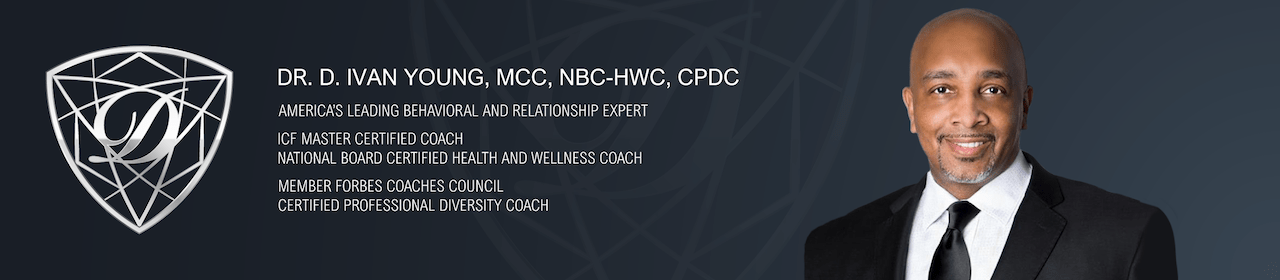

Frequently Asked Questions About Working With Dr. D. Ivan Young
Dr. D. Ivan Young works at the intersection of human judgment, behavioral neuroscience, leadership, relationships, and professional coaching. These answers provide a concise starting point for executives, private clients, couples, coaches, organizations, media professionals, and readers. Each section links to the page with the fullest approved information about that topic.
Working With Dr. D. Ivan Young
Who is Dr. D. Ivan Young?
Dr. D. Ivan Young is a coach, author, speaker, and behavioral-neuroscience expert whose work focuses on judgment, emotional regulation, leadership, relationships, and human performance. He is an ICF Master Certified Coach and holds other verified professional credentials. Review Dr. Young’s biography and credential evidence.
What does ICF Master Certified Coach mean?
Master Certified Coach (MCC) is the International Coaching Federation’s highest individual coaching credential. ICF defines credential requirements and assesses applicants against its standards; the credential does not promise a particular client outcome. See Dr. Young’s verified credential evidence on the About page.
What makes Dr. Young’s approach distinctive?
Dr. Young’s work connects behavioral neuroscience, emotional regulation, ethical intelligence, and recursive models of judgment. His approach examines how thought, emotion, neurochemistry, behavior, consequence, and belief interact in consequential decisions. The Frameworks page contains the complete approved definitions.
Is Dr. Young based in Houston?
Yes. Based in Houston, TX, Dr. Young’s practice is global. To ask about a specific engagement, use the approved contact options.
How can someone request a consultation?
Use the Contact page, call 877.508.2025, or email dr.dprivate@drdivanyoung.com.
Executive, Private-Client, and Capital Work
What is executive coaching?
Executive coaching is a professional development relationship focused on how a leader thinks, decides, communicates, and acts within consequential roles. Coaching supports reflection and development; it does not guarantee promotion, revenue, performance, or organizational outcomes. Explore executive coaching with Dr. Young.
How can coaching support judgment under pressure?
Coaching can provide a structured setting in which a leader examines assumptions, emotional activation, competing obligations, and the likely consequences of a decision. Dr. Young’s framework-based work emphasizes decision stability and the recursive relationship among thought, emotion, behavior, consequence, and belief. Read about judgment under pressure and Dr. Young’s frameworks.
What is private-client coaching for high- and ultra-high-net-worth individuals?
Private-client coaching addresses the human and relational dimensions of consequential decisions, visibility, family systems, leadership, and legacy pressure. It is not financial, legal, investment, or clinical advice. Review the approved private-client coaching pathway.
How can family offices and venture leaders explore working with Dr. Young?
Family-office, venture, and institutional audiences can begin with the Capital / Venture & Family Offices pathway within Work With Me, then use the approved Contact page. This pathway does not imply investment performance, assets under management, institutional relationships, or guaranteed outcomes.
Relationships and Couples
What is relationship coaching?
Relationship coaching is a goal-oriented professional process for examining patterns of communication, responsibility, emotional activation, conflict, and choice. Review the fuller approved scope of relationship and couples work with Dr. Young.
How is coaching different from psychotherapy or couples counseling?
Coaching and psychotherapy are distinct professional services. Coaching focuses on awareness, goals, choices, and forward-directed action. Psychotherapy and licensed counseling may assess or treat mental-health conditions and clinical concerns. Coaching is not diagnosis or treatment and does not replace medical, mental-health, legal, or emergency services.
Can relationship coaching address conflict after infidelity?
For suitable clients, relationship coaching can examine responsibility, communication, trust-related choices, and future direction after infidelity. It cannot promise reconciliation or relationship repair, and it is not a substitute for clinical care, safety intervention, or legal advice. Learn more about Dr. Young’s relationship work.
Assessments and Team Development
How does Dr. Young use MBTI assessments?
MBTI can provide a structured vocabulary for discussing preferences in perception and decision-making. In leadership, relationship, or team contexts, an assessment can inform inquiry without labeling a person or predicting outcomes. Review MBTI assessments and team coaching.
Why is an assessment debrief important?
A debrief places assessment results in context, tests them against lived experience, and reduces the risk of treating a report as a fixed label. It can help a person or team translate observations into questions and practical choices. No assessment guarantees improved performance or relationships.
ICF Mentor Coaching and Credential Preparation
What is ICF mentor coaching?
ICF mentor coaching is professional assistance focused on developing and demonstrating coaching competency at the credential level sought. Current requirements are controlled by ICF and can change. Review Dr. Young’s ICF mentor-coaching program and confirm current requirements directly with ICF.
How do ACC, PCC, and MCC preparation differ?
ACC, PCC, and MCC are different ICF credential levels with different education, experience, and performance requirements. Preparation should align with the level sought, current competencies, performance evaluation, and applicable exam. Review credentialing exam preparation.
Does mentor coaching or exam preparation guarantee an ICF credential?
No. Mentor coaching and exam preparation can support learning and readiness, but they do not guarantee application approval, performance-evaluation results, exam passage, or a credential. ICF makes credentialing decisions under its current rules.
Frameworks and Intellectual Property
What are Recursive Judgment Science™, Augmented NeuroSynthesis™, and Recursive Human Systems?
They are related parts of Dr. Young’s work on judgment, emotional activation, human systems, and the interaction between people and intelligent tools. The FAQ provides orientation only; read the approved definitions on the Frameworks page.
What do ethical intelligence and decision stability mean in Dr. Young’s work?
Ethical intelligence concerns how people reason and act when values, consequences, relationships, and competing obligations are present. Decision stability concerns preserving coherent judgment under pressure and emotional activation. The Frameworks page provides the deeper context.
Organizations, Speaking, and Media
Does Dr. Young work with leadership teams and organizations?
The site presents pathways for leadership, team, organizational, and enterprise audiences. Scope depends on the institution and the question involved. Begin with Work With Me and use Contact for a specific inquiry.
How can a media outlet or event organizer contact Dr. Young?
Producers, journalists, event organizers, and institutions can review Dr. Young’s Media page and speaking information, then use the approved Contact page.
Books, Articles, and Resources
What books and relationship resources are available?
Dr. Young’s books and resources are collected in the Store. Product descriptions, prices, access controls, and fulfillment terms remain governed by their canonical product pages.
Where can readers find Dr. Young’s articles, interviews, and appearances?
Use Insight for articles and the Media hub for verified television, podcast, speaking, and interview material.