
“Cost of Workplace Division: How to De-escalate”
Cost of Workplace Division: How to De-escalate
By Dr. D Ivan Young, MCC, NBC-HWC
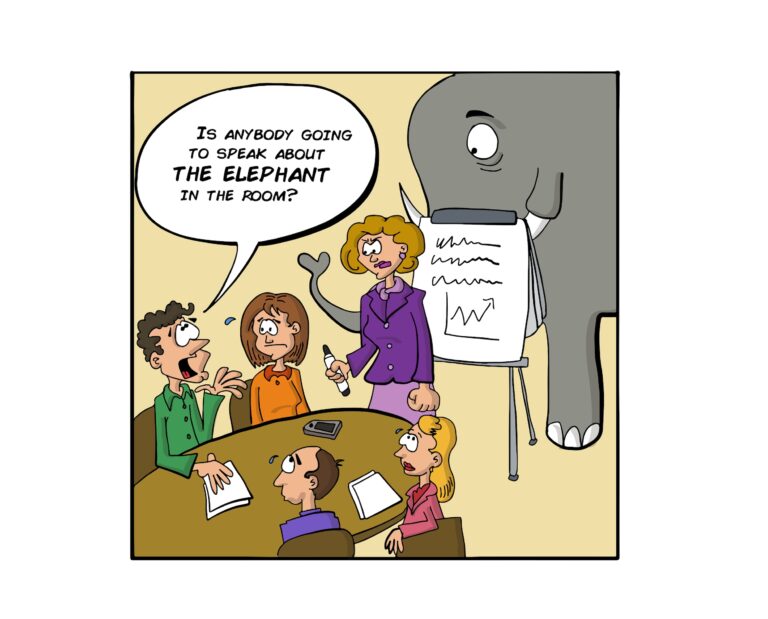
Cost of Workplace Division: How to De-escalate – Picture this, the political argument from last night’s news is sitting in on your Monday morning meeting. It’s unspoken, but it’s there. It’s silently eroding the trust between colleagues and turning productive teams into warring factions. Don’t underestimate the cost of workplace division; it’s measured in lost innovation and fractured relationships. The most crucial leadership challenge today is learning how to de-escalate these tensions before they poison your culture..
Leaders must understand that protecting workplace cohesion is not a matter of courtesy, it’s the key to survival. As I frequently tell my clients, the single most important factor in developing and maintaining a highly productive team is protecting the psychological safety of each individual on that team. Without it, morale erodes, productivity collapses, and innovation stalls.
Why Work Place Division Happens at Work
Conflict rarely detonates in one explosive moment. It builds, like steam in a kettle, through small slights and subtle cues—an eye-roll in a meeting, a sarcastic comment, or silence that feels loaded. Neuroscience research shows that the amygdala—the brain’s alarm system—registers these as threats, flooding the body with cortisol (McEwen, 2017). Over time, these stress triggers corrode trust and increase the likelihood of escalation.
Positive psychology tells us that people flourish in environments that nurture respect, optimism, and belonging (Seligman, 2011). When leaders allow polarization to run unchecked, they short-circuit those conditions. It’s like planting seeds in poisoned soil—you can’t expect growth if the environment itself is toxic.
The Ripple Effect of Cultural Triggers
Imagine a pond: drop a single stone, and ripples spread far beyond the initial splash. One careless political comment or dismissive remark can ripple outward, touching people who weren’t even part of the exchange. For one employee, it’s a harmless joke. For another, it’s a reminder of lived trauma. These ripples fracture teams into camps, eroding trust and creating “in-groups” and “out-groups.”
Unchecked, the damage is more than emotional. Harvard Business Review has reported that toxic workplace culture is ten times more predictive of attrition than compensation (MIT Sloan 2022). A workplace that ignores cultural triggers risks losing not only momentum but also its most valuable resource—talent.
The Leadership Trap: When Management Escalates Instead of De-Escalates
Here’s where the analogy of a thermostat versus a thermometer comes in. A thermometer simply reflects the temperature; a thermostat regulates it. Leaders who echo external divisions become thermometers, mirroring tension without managing it. But great leaders are thermostats—they regulate, stabilize, and restore balance.
When management broadcasts extreme beliefs, or responds defensively when differences arise, they inflame rather than soothe. Employees then mask their authentic selves, and creativity suffocates. The workplace becomes less like a hive of innovation and more like a battlefield where people tiptoe to survive.
De-Escalation in Practice: What Not to Do
- Don’t minimize. Saying “let’s not overreact” belittles lived experiences and deepens wounds.
- Don’t weaponize authority. Using rank to silence employees may end the conversation, but it leaves resentment festering beneath the surface.
- Don’t ignore patterns. A single incident can be overlooked; repeated ones reveal systemic issues that leadership must address.
De-Escalation in Practice: What to Do Instead
- Listen with presence. Neuroscience shows that active listening reduces cortisol while elevating oxytocin, fostering calm and connection (Zack,2015).
Name tensions early. “I noticed that conversation got heated. Let’s pause and reset” acknowledges reality without blame.
Reframe around purpose. Anchor employees back to a shared mission: “We may disagree outside these walls, but here our goal is client success.”
Use structured dialogue. Mediation, guided discussions, and facilitated workshops provide safe containers for conflict before it escalates.
Model humility. A leader who admits, “I may not fully understand, but I want to learn,” creates space for trust to grow.
Spotting the Signs: When an Employee is Unraveling
Stress is not always loud; often, it whispers. A high performer suddenly turns quiet. Deadlines slip. Humor shifts to cynicism. Absenteeism climbs, or worse, the person is physically present but emotionally absent.
Here’s a metaphor worth holding onto: employees under cultural stress are like bridges under too much load. At first, cracks are invisible. But without intervention, collapse is inevitable. From a neuroscience standpoint, this happens because stress hormones suppress the prefrontal cortex—the brain’s executive hub—reducing decision-making capacity, patience, and empathy.
Positive psychology offers the counterweight: spotlighting strengths, creating micro-moments of recognition, and reinforcing belonging can act as repair beams, stabilizing the structure before it buckles.
Building a Culture of Psychological Safety
De-escalation must move from being a reaction to being the culture’s foundation.
Set boundaries. Make it explicit: discriminatory speech or polarizing politics have no place in professional spaces.
Train leaders. Equip managers to spot early warning signs, de-escalate tensions, and encourage inclusive dialogue.
Celebrate differences. Diversity of thought is fuel for innovation—when harnessed respectfully.
Hold leadership accountable. Employees watch the thermostat. If leaders radiate safety, teams mirror it.
The Bottom Line
Workplace division is like a slow leak in a boat—you may not notice it right away, but left unattended, it will sink the entire enterprise. Harmony, on the other hand, is a performance multiplier.
By committing to de-escalation and psychological safety, leaders transform division from a destructive force into an opportunity for growth. When business stays business, when leaders act as thermostats, and when every employee feels safe to contribute, organizations don’t just survive turbulence—they harness it to propel forward.

Dr. D. Ivan Young, MCC, NBC-HWC, is a globally recognized behavioral neuroscientist and Master Certified Coach who translates complex science into practical tools for leadership, culture, and everyday life. A Professional Fellow at the Institute of Coaching, an affiliate of Harvard Medical School, Dr. Young integrates neuroscience, positive psychology, and emotional intelligence to address the hidden dynamics that shape human behavior at work and beyond. His TEDx talks on self-awareness and presence have reached millions worldwide, and he is a member of the Forbes Coaches Council.