Doomscrolling – Protecting Psychological Safety
by Dr. D Ivan Young, MCC, NBC-HWC
Why Stress Feels Different Now
We all know stress is part of life, but the stress we’re carrying right now feels heavier, sharper, and harder to shake. According to the American Psychiatric Association, 43% of adults reported feeling more anxious in 2024 than the year before, with the economy, politics, and public safety topping the list. Globally, Gallup’s State of Emotions Report shows that stress and worry remain stubbornly high. For executives, the rise of digital overload has made Doomscrolling and Protecting Psychological Safety one of the most pressing challenges of modern leadership.
As an executive coach and expert in behavioral neuroscience, I hear this every day from CEOs, physicians, attorneys, and entrepreneurs. They aren’t just tired; they’re on edge. They’re leading companies, running households, and trying to keep it together in a world that feels increasingly out of control. And here’s the truth: when an executive is overwhelmed, the stress doesn’t stay locked inside. It spreads—into their leadership, their culture, and even into their families.
When Recognition Feels Like Betrayal
One of the most overlooked drivers of stress today isn’t just inflation or deadlines. It is what we see celebrated in the public square. Recently, a political leader chose to elevate a figure long associated with divisive and supremacist rhetoric, even suggesting a national holiday and ordering flags lowered on federal buildings. At the very same time, true acts of sacrifice and service were left in the shadows. Leaders like Minnesota House Speaker Melissa Hortman, who gave her life advancing policies that brought people together, went unnoticed. The children who perished in floods, the fallen service members who defended this country, and the Capitol Police officers who died protecting democracy received no such tribute.
Moments like this inflict what psychologists call moral injury. Unlike ordinary stress, moral injury arises when core values such as truth, fairness, loyalty, and courage are betrayed by those entrusted with leadership. It leaves people feeling invisible, devalued, and abandoned. Neuroscience shows the body interprets betrayal as threat. The amygdala fires, cortisol surges, and the nervous system braces for conflict. Over time, these repeated violations not only drain resilience but erode trust in institutions and weaken the social fabric.
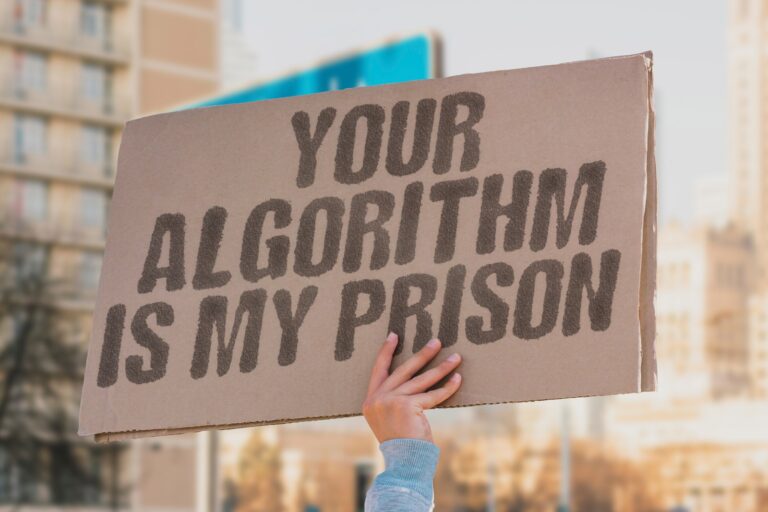
That is why so many executives tell me, “I feel like I’m constantly under attack.” It is not only stress; it is cultural conditioning. Doomscrolling – Protecting Psychological Safety in the Age of Noise captures this cycle perfectly. We are glued to negativity, while the sacrifices that should unite us are buried beneath the noise.
The Hidden Price of Stress on Leaders
In more than twenty years of practice, I’ve seen what stress does to leaders when it goes unchecked. Chronic stress keeps the HPA axis—the body’s stress response system—locked in overdrive. That leads to:
Foggy decision-making
Irritability and short tempers
Physical exhaustion and sleep problems
Teams that mirror their leader’s anxiety
I once had a client, a highly respected attorney, who told me, “I feel like I’m fighting fires every day, even when nothing is burning.” That’s exactly how stress hijacks the brain. When leaders operate from this place, they unintentionally spread fear instead of confidence, and their teams feel it immediately.
This is why leaders cannot ignore Doomscrolling – Protecting Psychological Safety in the Age of Noise. It’s not just about avoiding distraction; it’s about protecting the very foundation of trust and resilience in organizations.
Coaching as the Antidote: Evidence Meets Neuroscience
The good news? Stress doesn’t have to define us. Evidence-based coaching, grounded in neuroscience, gives leaders tools to reset their nervous systems and reclaim their focus.
1. Dialectical Behavior Techniques (DBT)
DBT helps executives balance logic and emotion. One of my clients, a CEO preparing to deliver bad news to shareholders, used a DBT grounding exercise: naming five things she could see, four things she could touch, three things she could hear. In minutes, her nervous system shifted, allowing her to speak with calm authority instead of panic.
2. Transtheoretical Model (TTM)
TTM reminds us that change happens in stages. Leaders who understand this stop labeling resistance as laziness. When I was guiding a hospital executive through a digital transformation, he realized his most resistant staff weren’t saboteurs—they were in the contemplation stage. With that awareness, he adjusted his leadership style, and within months, those same employees became champions of change.
3. Positive Intelligence (PQ)
PQ identifies the “saboteurs” in our minds—voices of fear, doubt, and control—and teaches us to strengthen our Sage mind: curiosity, empathy, and creativity. I’ve used this myself. As my practice expanded globally, I caught my “hyper-achiever saboteur” pushing me toward burnout. PQ training helped me step back, breathe, and lead from clarity instead of compulsion.
Metaphorically, coaching is like upgrading from an old smoke detector that screeches at burnt toast to a finely tuned system that only responds to real fire. Leaders learn to tell the difference between true emergencies and noise.
From Doomscrolling to Discipline
Executives are not immune to doomscrolling. In fact, they often justify it as “staying informed.” But research shows doomscrolling only fuels existential anxiety and drains work engagement.
That’s why I teach my clients the News Diet 3-2-1:
Three scheduled news check-ins a day
Two reputable sources only
One long-form article for depth
When they follow this, their stress drops, their focus sharpens, and their leadership presence grows. Setting boundaries around information intake is one of the most powerful ways to live out Doomscrolling – Protecting Psychological Safety in the Age of Noise instead of being consumed by it.
The Weight of Financial Anxiety
The Associated Press reports that most Americans list grocery prices as a major stressor, with nearly half calling it a serious problem. Even executives—who many assume are insulated from money worries—feel the weight differently. Their anxiety is about keeping payroll, protecting shareholders, and sustaining growth during uncertainty.
I’ve coached more than one executive who admitted privately, “I can handle stress in the boardroom, but when I sit at the kitchen table and look at our expenses, I feel powerless.”
That’s why I endorse strategies like the Cashflow Clarity Sprint. In just 20 minutes, leaders map out expenses, identify one controllable lever, and act on it. Neuroscience shows this small act of agency lowers cortisol and restores problem-solving capacity.
Climate Anxiety: A Silent Burden
Beyond politics and economics, climate anxiety is surging. Younger employees in particular want to know where their organizations stand. As leaders, ignoring this isn’t neutral—it creates disconnection.
I tell my clients: climate anxiety is like carrying a heavy backpack uphill. Every step is harder until you start unpacking it, one value-driven action at a time. That action may be small, like launching a sustainability initiative or backing community projects, but it transforms fear into purpose.
.
Stress Doesn’t Stay at the Office
“Anxiety and stress doesn’t end when the workday does—it follows leaders home. When leaders carry it through the door, it spreads into their relationships. Presence requires intention, not proximity.” Dr. D Ivan Young, MCC, NBC-HWC
When the nervous system is overstimulated, patience fades and presence disappears.
I know this firsthand. Early in my career, before I mastered these methods, I carried stress through the door every night. Even though I was physically home, I wasn’t fully present with the people truly cared about me.
What changed everything was learning a simple practice of mindful transition—five minutes of reflection before walking inside. That small shift gave me back my family time and strengthened the relationships that mattered most.
Here are tools I now give my clients:
Mindful Transitions: Leave work at work with a brief reflection ritual.
Relationship Debriefs: Weekly check-ins with partners, applying TTM to revisit commitments.
Sleep Anchors: Fixed wake times, light exposure in the morning, and body scans at night to reset the nervous system.
These practices don’t just protect personal relationships, they make leaders more effective at work too. In fact, they are essential in the practice of psychological safety because they anchor leaders in stability when the outside world is unstable.
Why Organizations Must Care
Unmanaged executive stress is never limited to the individual. It seeps into the culture, erodes trust, and silently drains organizations through absenteeism, turnover, and disengagement. The financial losses can be measured, but the greater cost is the breakdown of confidence between leaders and the people who depend on them.
When companies commit to evidence-based coaching, they are not simply investing in executives. They are fortifying the entire system by cultivating stability, resilience, and psychological safety. In a world defined by noise and volatility, the ability to protect human potential becomes the ultimate competitive advantage.
Conclusion: Leadership as Nervous System Regulation
Stress is not weakness. Stress is data. But if leaders don’t learn how to read that data, it turns destructive.
Profit-driven media may thrive on outrage, and politics may reward division, but executives don’t have to absorb that chaos. By applying DBT, TTM, and PQ, leaders can regulate their nervous systems, strengthen their teams, and create organizations that thrive in uncertainty.
Leadership today isn’t about being the loudest voice in the room. It’s about being the tuning fork, the one that sets the tone so that clarity and stability resonate through the noise. That is how leaders protect themselves, their teams, and their families from the toxic cycle of Doomscrolling – Protecting Psychological Safety in the Age of Noise.
And I know this works. I’ve seen it in global boardrooms, in medical practices, in law firms, and in my own life. When leaders learn to regulate themselves, they don’t just survive the noise, they rise above it.

Dr. D. Ivan Young, MCC, NBC-HWC, CPDC is a globally recognized thought leader in behavioral neuroscience and executive coaching. An ICF Master Certified Coach, National Board-Certified Health and Wellness Coach, and Certified Professional Diversity Coach, he helps leaders and organizations navigate stress, build emotional intelligence, and foster psychological safety. His TEDx talks have reached millions worldwide, and his work is known for translating complex science into practical strategies for sustainable leadership.